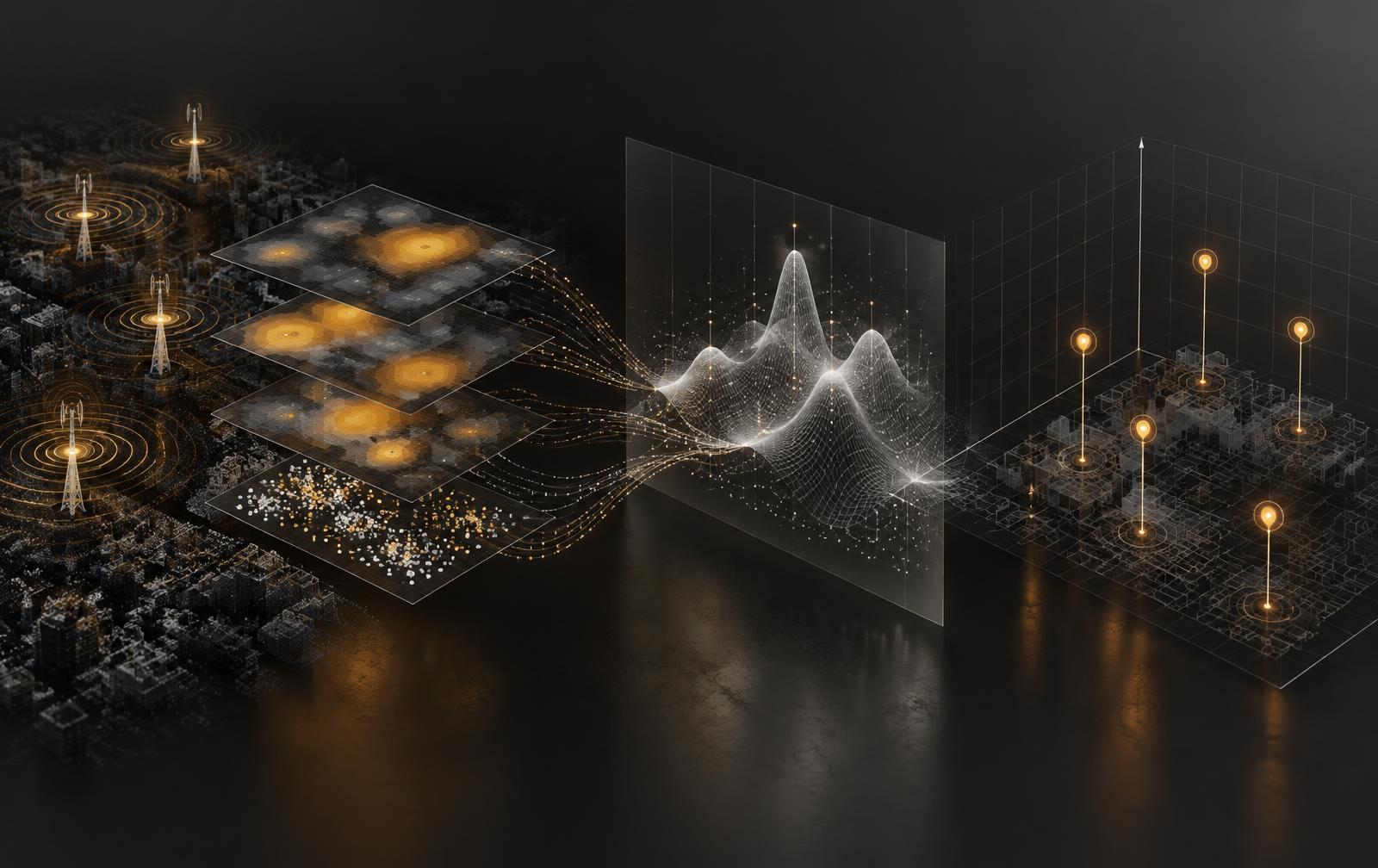
Wireless relationships revealing hidden geometry in three-dimensional space

Research / Publications

Research built around difficult questions.

Peer-reviewed publications, conference papers, preprints and academic research exploring localization, wireless sensing, industrial IoT, machine intelligence and the emerging intersection between digital and physical systems.

Our research spans more than a decade of work on wireless positioning, connected industrial systems and intelligent physical environments.

What began with industrial wireless sensing and location systems has evolved toward infrastructure-light localization, spatial intelligence and new approaches for understanding the physical world through networks themselves.

Geometry hidden inside connectivity

Research evolution

A research direction taking shape.

The papers trace a progression from connected industrial sensing toward systems that can infer spatial context for themselves.

  1. 2017Connected Industrial Positioning

    Wireless sensing, cloud connectivity and industrial automation.

  2. 2020Machine-Learned Positioning

    Using machine-learning techniques to improve wireless location prediction.

  3. 2025Rethinking RTLS Infrastructure

    Investigating why cost and complexity prevent wider adoption of real-time location technologies.

  4. 2026Anchor-Free Localization

    Inferring spatial relationships without surveyed anchors or conventional ranging.

  5. NextSpatial Intelligence & Physical AI

    Networks that increasingly understand location, environment and physical context.

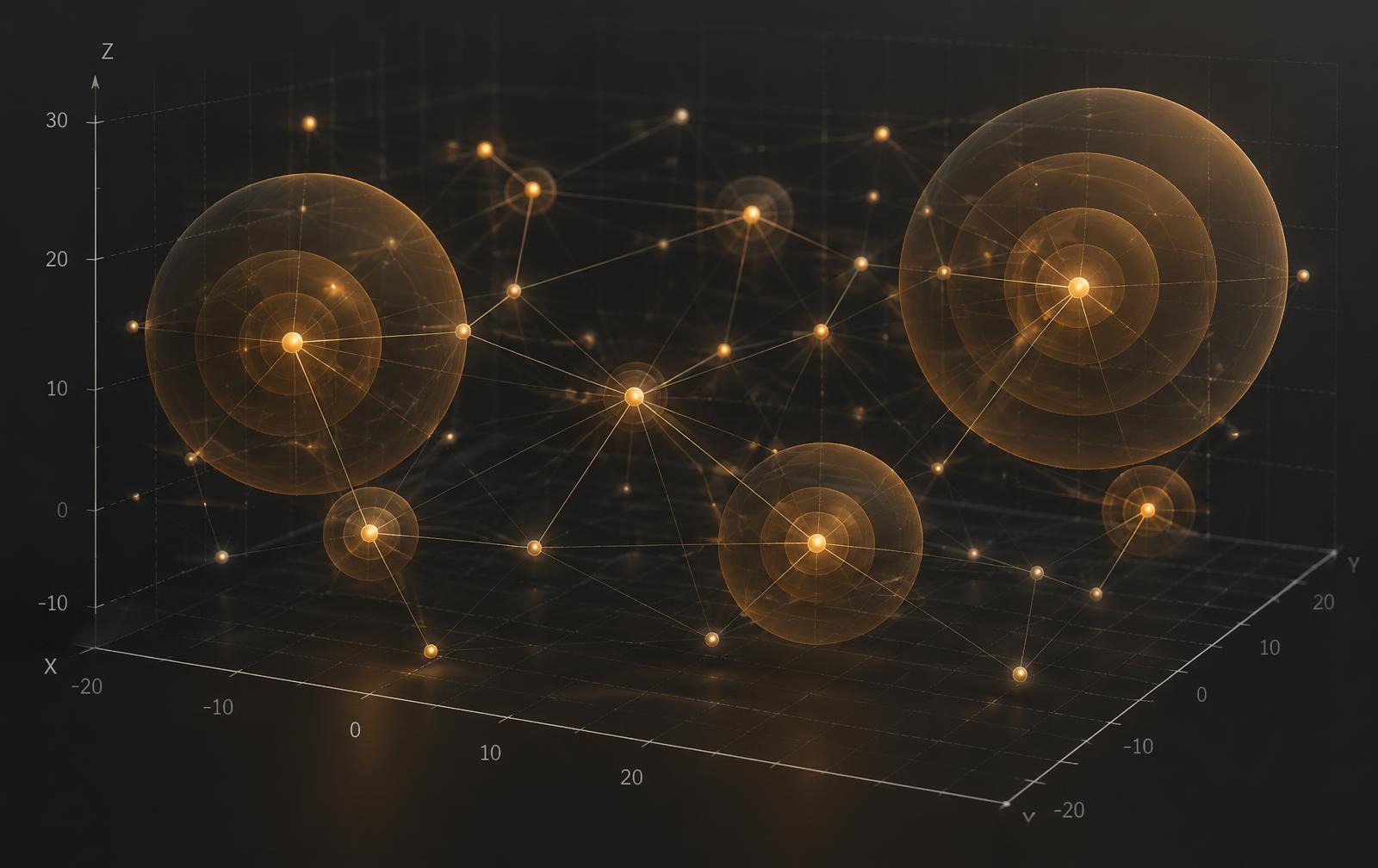
Wireless nodes and transmission layers revealing geometry inside a three-dimensional coordinate space
Connectivity / Transmission levels / Relative geometry

Featured research / IEEE Access / 2026

Protraction Technique: Anchor-Free Range-Free Localization from Multi-Level Binary Reachability in Wireless Sensor Networks

IEEE Access, 20263D Localization & Positioning

What if a wireless network could infer spatial relationships without GPS, fixed anchors or measuring exact distances?

This work introduces the Protraction Technique, an anchor-free, range-free localization framework that uses patterns of binary wireless reachability collected across multiple transmission levels.

Rather than asking devices exactly how far apart they are, the method studies which devices can communicate with one another as transmission conditions change. Those relationships contain spatial information.

The research explores how that information can be transformed into relative localization while reducing dependence on dedicated positioning infrastructure.

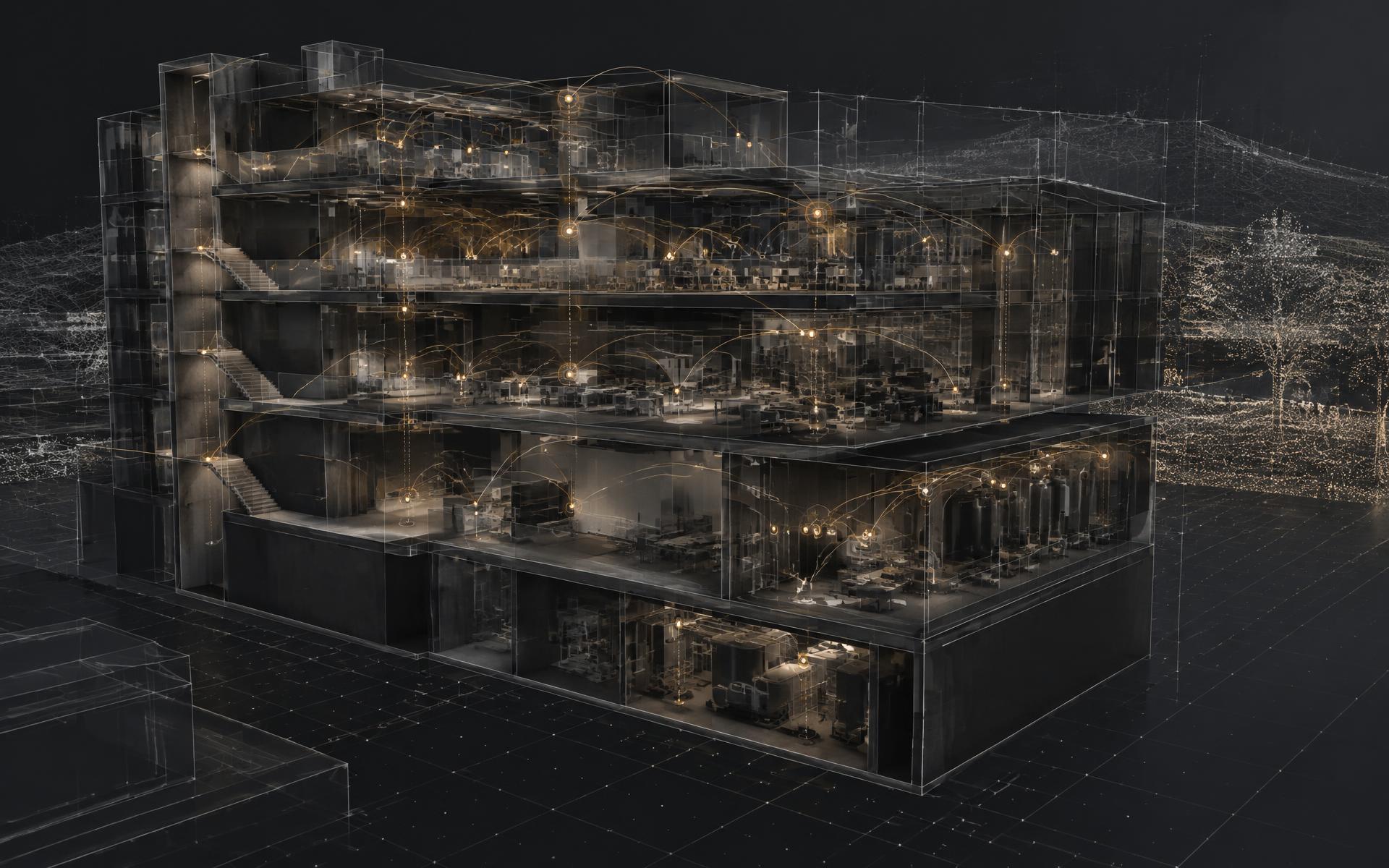
Multi-level industrial environment reconstructed through wireless network relationships
2026 / 3D Localization & Positioning

2026 / 3D localization / Industrial environments

3D Protraction Technique for Anchor-Free, Range-Free Wireless Localization in Industrial Warehouses via Multi-Level Binary Reachability

arXiv Preprint, 2026

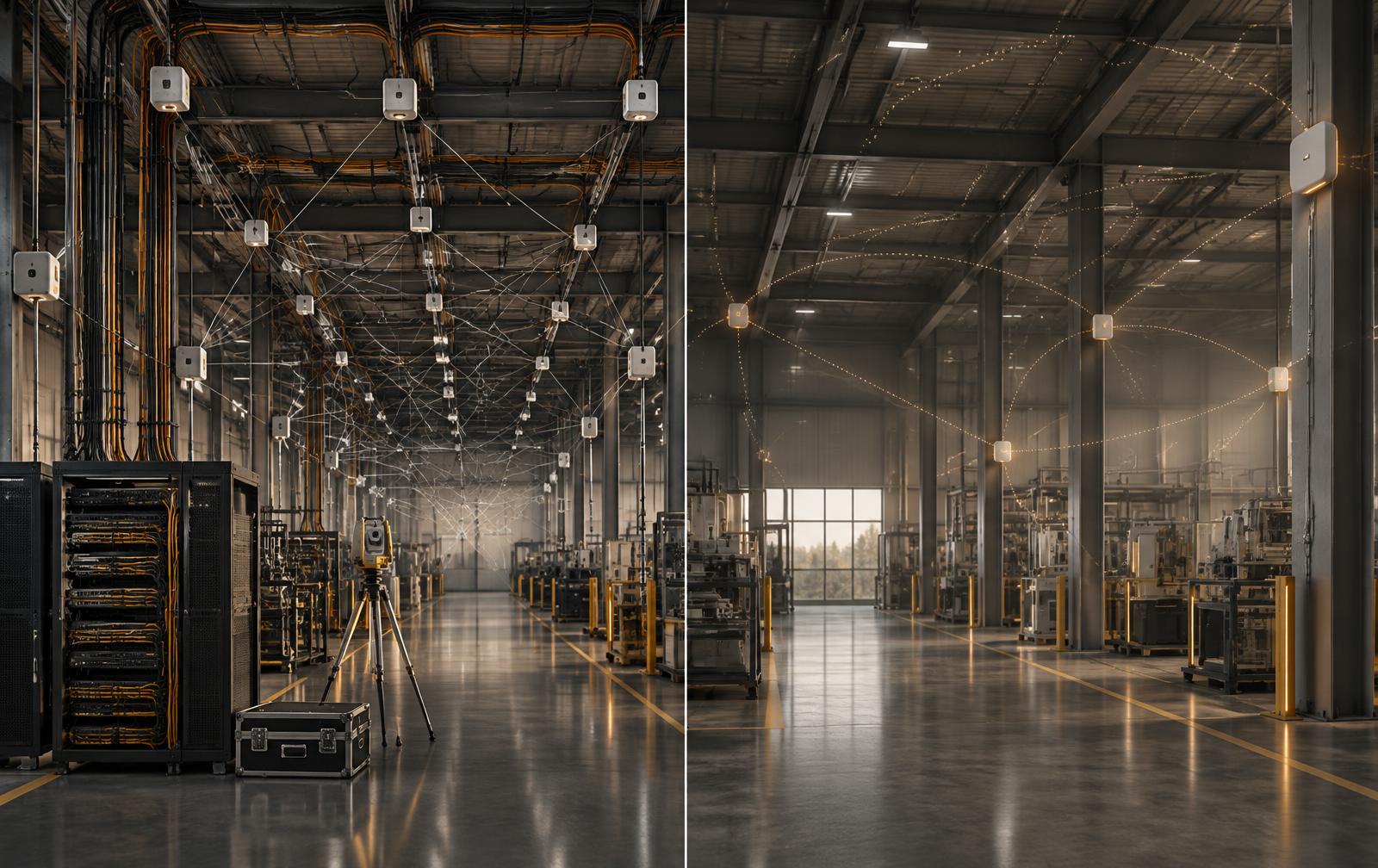
Industrial warehouses are difficult environments for conventional positioning systems. Fixed reference nodes create costs across hardware, wiring, power, networking, calibration, installation and maintenance.

This research extends the Protraction Technique into three-dimensional industrial environments, investigating whether devices can reconstruct spatial relationships using multi-level binary wireless connectivity rather than conventional ranging.

The work moves localization toward systems that require significantly less positioning infrastructure.
3D LocalizationIndustrial IoTAnchor-FreeRange-Free
Industrial location systems compared through dense and infrastructure-light wireless networks
2025 / Industrial Localization

2025 / Real-time location systems

Cost and Complexity as Barriers to RTLS Adoption in SMEs: A Survey and Analysis

arXiv Preprint, 2025

Real-time location systems can provide valuable information about assets, workflows and operations. Yet widespread adoption, particularly among small and medium-sized industrial organizations, remains limited.

This research examines one of the central reasons: the infrastructure required to deploy localization can itself become the barrier to localization.

The study investigates installation cost, infrastructure complexity, system integration, deployment requirements and ongoing maintenance. The problem directly motivates research into simpler, infrastructure-light approaches.

Can localization become useful without first becoming expensive?
RTLSIndustrial IoTTechnology AdoptionSMEs
Wireless observations passing through a mathematical model and resolving into spatial coordinates
2020 / Localization · Machine Learning · Wireless Networks

2020 / Machine learning / Positioning

Wireless Positioning Network Location Prediction Based on Machine Learning Techniques

IEEE Canadian Conference on Electrical and Computer Engineering, 2020

Wireless signals contain information about location, but extracting that information accurately can be difficult.

This research investigated machine-learning techniques for wireless location prediction, exploring how learned relationships between wireless observations and physical positions could improve localization.

It represents an important bridge between traditional wireless positioning and increasingly intelligent localization systems.

Machine LearningWireless NetworksLocalization
Industrial facility connected through sensors, gateways and spatial data paths
2017 / Industrial IoT · Wireless Positioning · Cloud Systems

2017 / Industrial IoT

Wireless Positioning Sensor Network Integrated with Cloud for Industrial Automation

2017 IEEE 42nd Conference on Local Computer Networks (LCN)

Before Physical AI became a common term, industrial environments were already beginning to connect physical assets with digital infrastructure.

This research explored a wireless positioning and sensing architecture integrating wireless sensor networks, location information, industrial sensing, cloud connectivity and automation systems.

The work investigated how physical objects and their surrounding conditions could become visible to digital industrial systems.

Industrial IoTWireless NetworksCloudLocalization
Foundational sensing and positioning concepts visualized around an industrial subject
Origins / Industrial IoT · Localization · Wireless Sensor Networks

Early research / Industrial location systems

Location and Sensing Network for Industrial Automation

Graduate Thesis, Toronto Metropolitan University repository

Much of the later research direction began with a deceptively simple industrial problem: How can physical assets become visible to software?

This research explored wireless sensor networks capable of combining location information with environmental sensing for industrial automation.

It helped establish the direction that would later expand into wireless positioning, machine-learning localization and infrastructure-light spatial intelligence.

Industrial IoTWireless NetworksLocalization

Academic record

All Publications

Search and filter the complete publication record shown on this page.

Peyman Moeini · Mark Coates

LocalizationWireless NetworksAnchor-FreeRange-Free

Research system

The publications are connected.

Each paper addresses a different part of a broader question: How can connected systems understand the physical world with less infrastructure and greater intelligence?

01Wireless Sensing02Industrial Positioning03Machine-Learned Localization04Infrastructure-Light Localization05Physical & Spatial Intelligence
Explore Research Areas

What comes next

The questions continue.

Current research continues to explore localization and intelligence in environments where traditional positioning systems struggle.

01

3D Localization

Extending infrastructure-light positioning into complex three-dimensional environments.

02

Multi-Story Environments

Understanding spatial relationships across rooms, floors and structures.

03

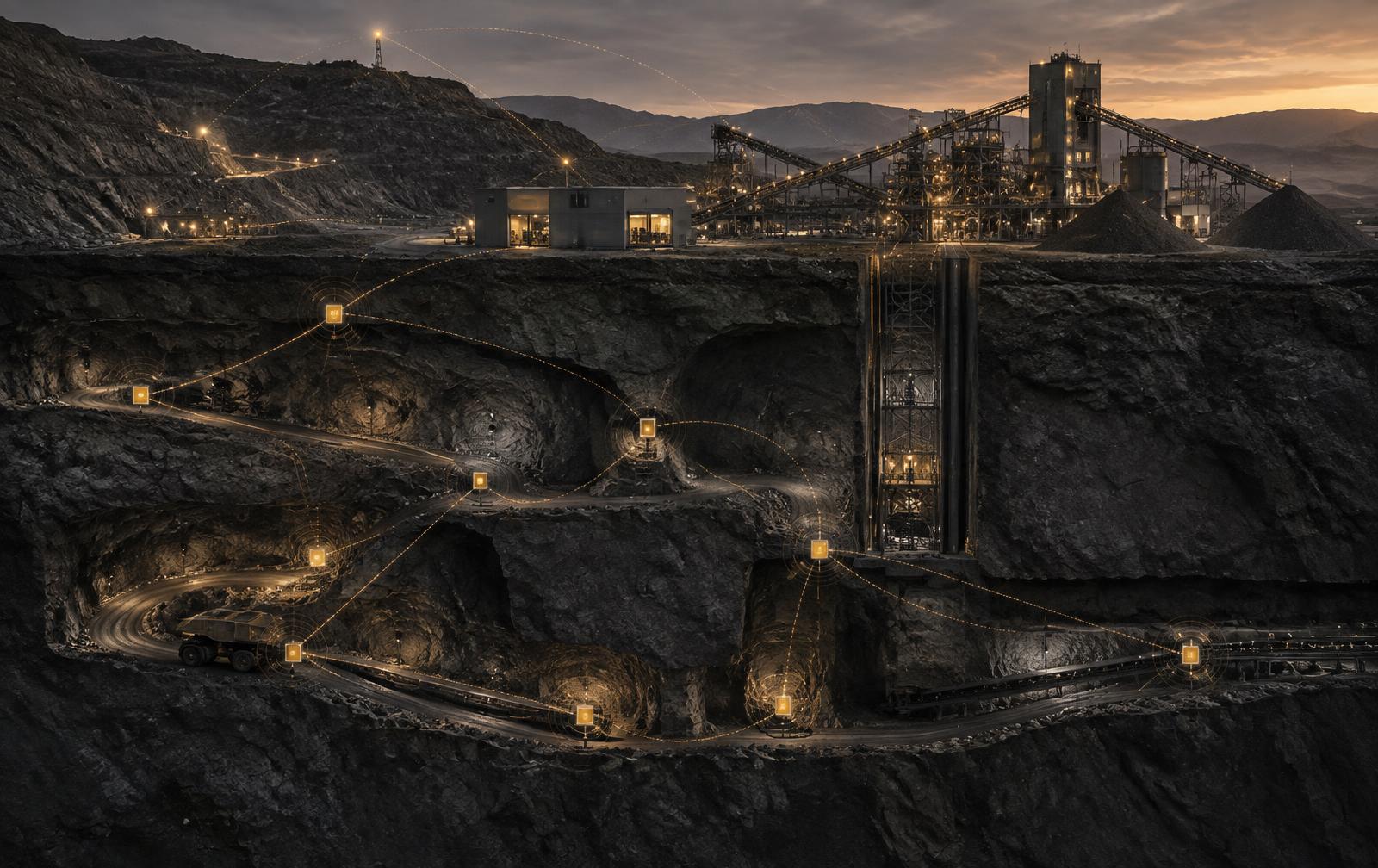
Industrial & Underground Environments

Localization where radio propagation, infrastructure and accessibility create unusual constraints.

04

Material Intelligence

Understanding the position and movement of wireless devices embedded inside bulk materials.

05

Network Intelligence

Designing communication protocols that reduce power, traffic and infrastructure requirements.

06

Physical AI

Combining sensing, localization, communication and artificial intelligence to understand physical environments.

Explore Current Research

Research record

Follow the research.

For citation information, related research and the latest indexed publications, visit the Google Scholar profile.

View Google Scholar Profile
Industrial environment connected by embedded sensing and spatial intelligence

Research collaboration

Have a difficult problem worth researching?

We are interested in conversations with researchers, universities, companies and organizations working on challenging problems involving wireless systems, localization, industrial IoT, Physical AI and spatial intelligence.

Joint researchAcademic collaborationIndustrial researchExperimental deploymentsTechnology validationGraduate researchData collaborationResearch commercialization

Research is a sequence, not a collection.

Each paper answers one question and usually reveals several better ones.