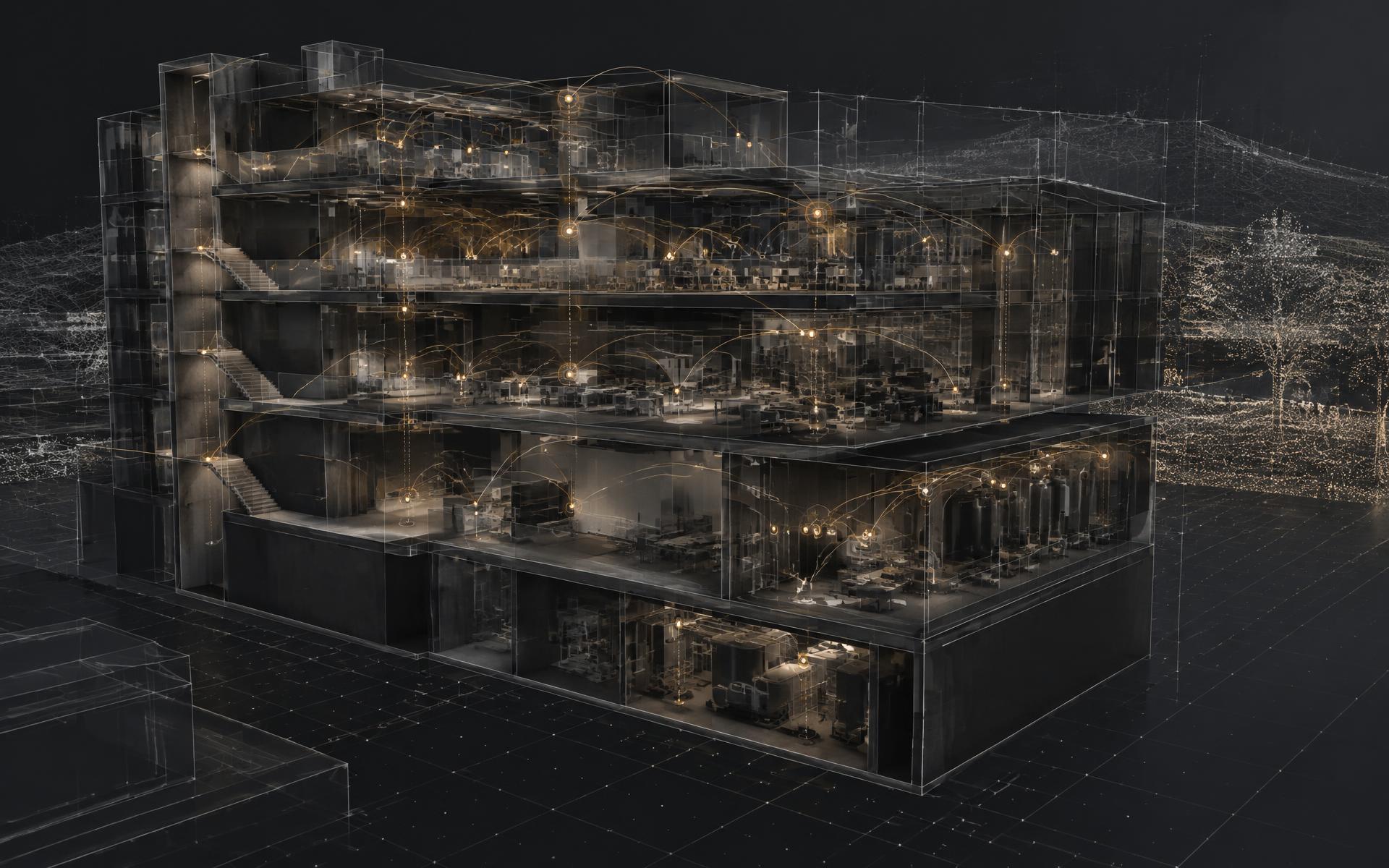
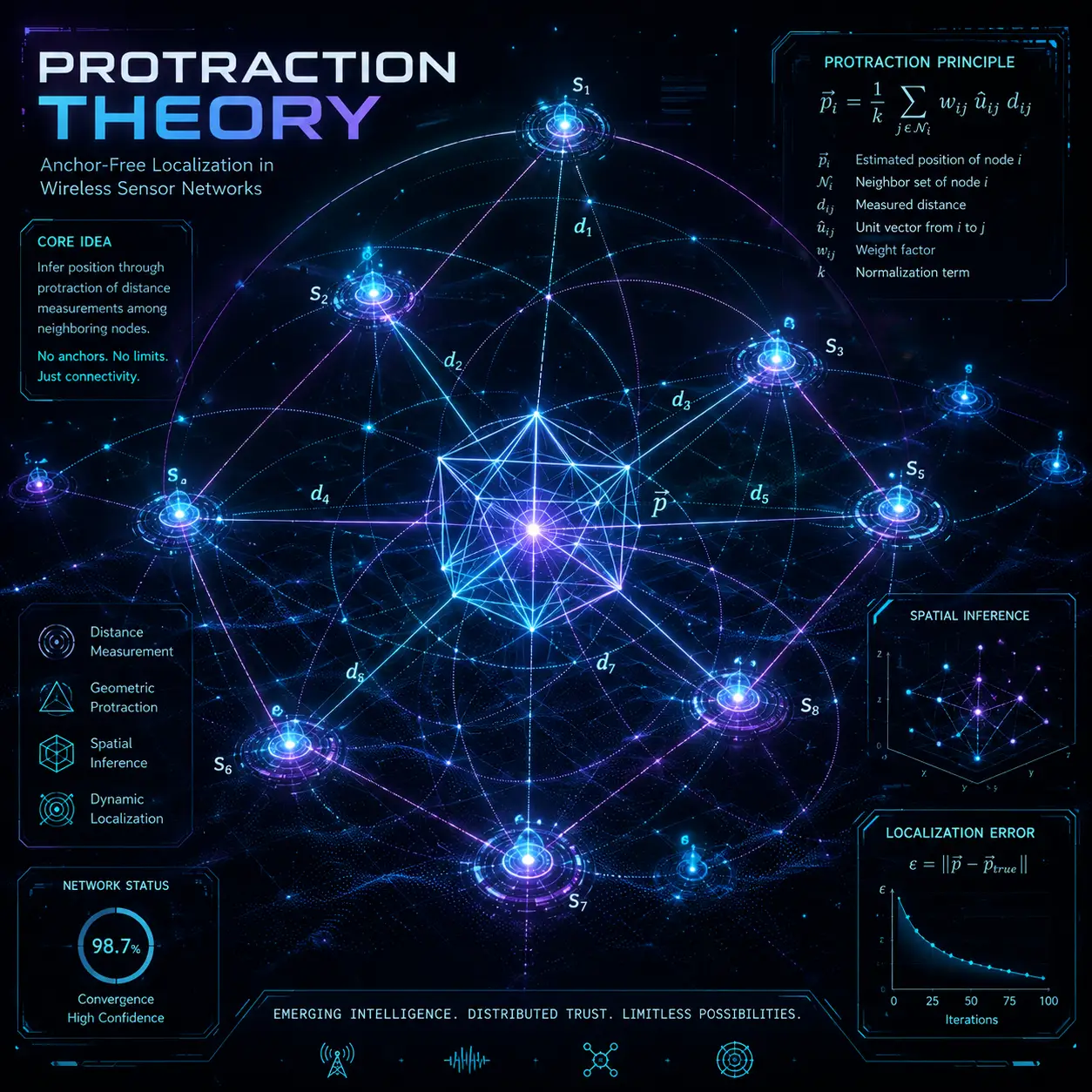
A wireless network reconstructing the geometry of a multi-level physical environment

Research / Research Areas

Intelligence for the physical world.

Research at the intersection of wireless systems, localization, sensing, artificial intelligence and complex physical environments.

Our work explores how connected devices can understand where they are, communicate efficiently, interpret their surroundings and operate intelligently, even in environments where GPS, conventional infrastructure or traditional sensing methods are unavailable.

From anchor-free 3D localization to Physical AI and industrial intelligence, the goal is to develop systems capable of understanding and interacting with the physical world.

Research philosophy

The physical world is still largely invisible to computers.

Digital systems are exceptionally good at understanding information that already exists digitally.

The physical world is harder.

Buildings, mines, factories, materials, equipment and infrastructure are dynamic, three-dimensional and often difficult to instrument.

Many environments cannot rely on GPS.Others cannot justify dense positioning infrastructure.Wireless signals may be unreliable.Energy may be limited.Connectivity may change constantly.

Our research explores how intelligent systems can operate under those constraints.

The objective is not simply to connect more devices. It is to enable devices and systems to understand where they are, what is around them, how they should communicate and what should happen next.

Research landscape

Intelligence should not stop at the screen.

These are not isolated disciplines. Together, they create intelligent physical systems.

Wireless SensingLocalizationSpatial UnderstandingEdge IntelligencePhysical AIIndustrial Intelligence
Scientific visualization of a wireless network reconstructing spatial geometryR-01 / Spatial intelligence
01

Spatial intelligence

3D Localization & Positioning

Understanding where things are without relying on traditional infrastructure.

Localization is fundamental to intelligent physical systems. Yet many environments cannot rely on GPS, surveyed anchors, precise ranging or dense infrastructure.

Our research investigates new methods for determining the relative position of wireless devices using limited information such as connectivity, communication relationships, transmission power and environmental structure.

A major focus is anchor-free and range-free localization. Instead of asking devices to measure exact distances from known reference points, these methods infer spatial structure from the way devices interact with one another.

Anchor-free localizationRange-free localization3D positioningConnectivity-based localizationMulti-level wireless observationsTopological localizationRelative positioningBuilding-aware localizationLocalization in constrained environmentsSpatial reconstruction from network relationshipsInfrastructure-light positioning
Active research direction
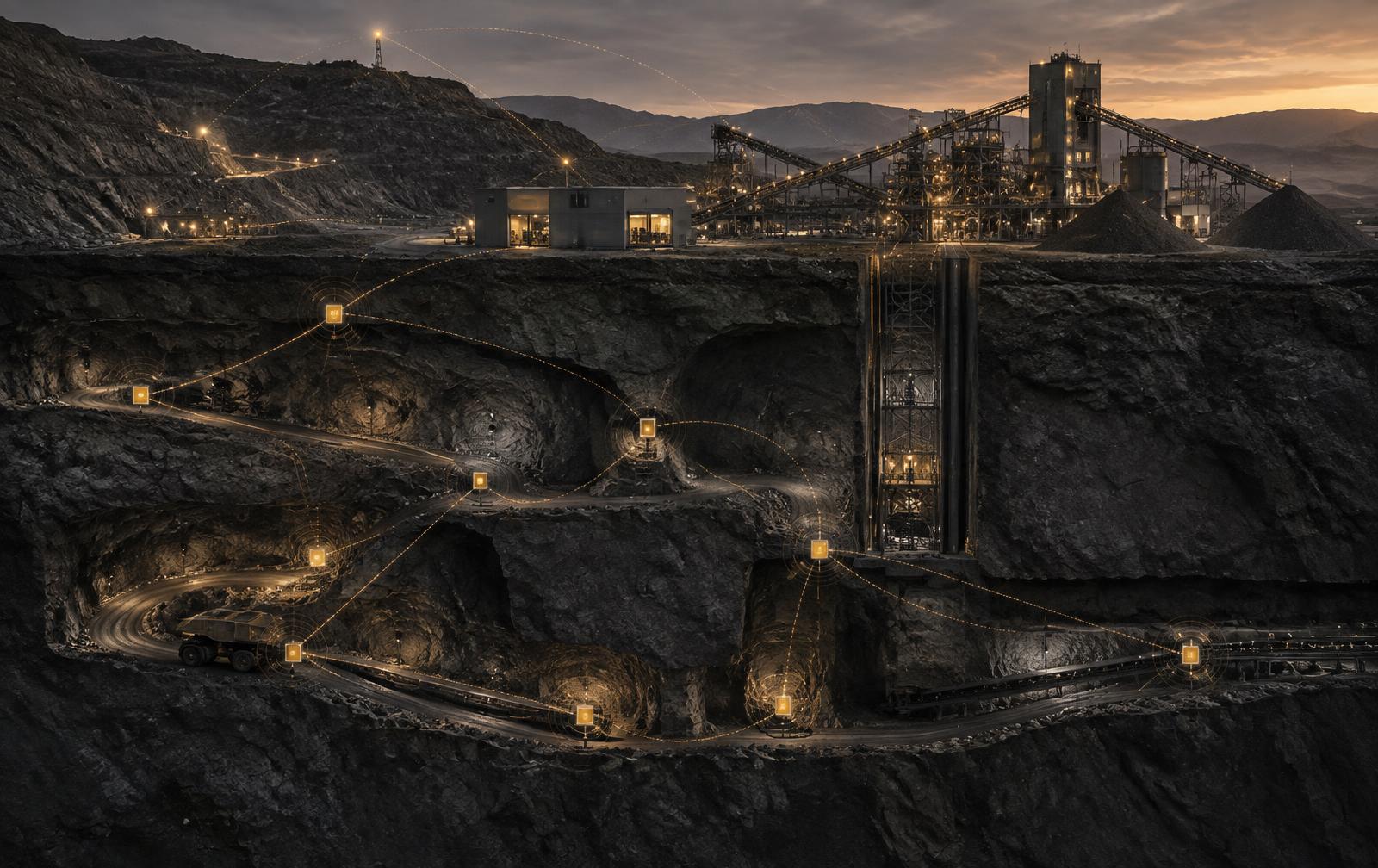
Industrial and underground environment connected by embedded wireless sensor nodesR-02 / Connected systems
02

Connected systems

Wireless Sensing & IoT

Giving physical environments a digital nervous system.

The Internet of Things becomes significantly more powerful when devices can do more than simply transmit sensor readings.

Our research explores wireless systems capable of sensing, communicating and adapting under real-world constraints.

A particular focus is on systems operating where infrastructure is limited, batteries must last for long periods, radio propagation is difficult, environmental conditions are unpredictable and devices cannot depend on continuous connectivity.

Low-power wireless systemsIndustrial IoTDistributed sensingWireless sensor networksMulti-level transmission systemsAdaptive communicationPeer-to-peer wireless interactionEnergy-efficient sensingHarsh-environment communicationsLong-life embedded sensingResilient connectivityWireless network architecture
Active research direction
Human-centered industrial environment augmented by intelligent sensing and spatial dataR-03 / Physical intelligence
03

Physical intelligence

Physical AI & Intelligent Systems

AI that understands and interacts with the physical world.

Artificial intelligence is moving beyond purely digital environments.

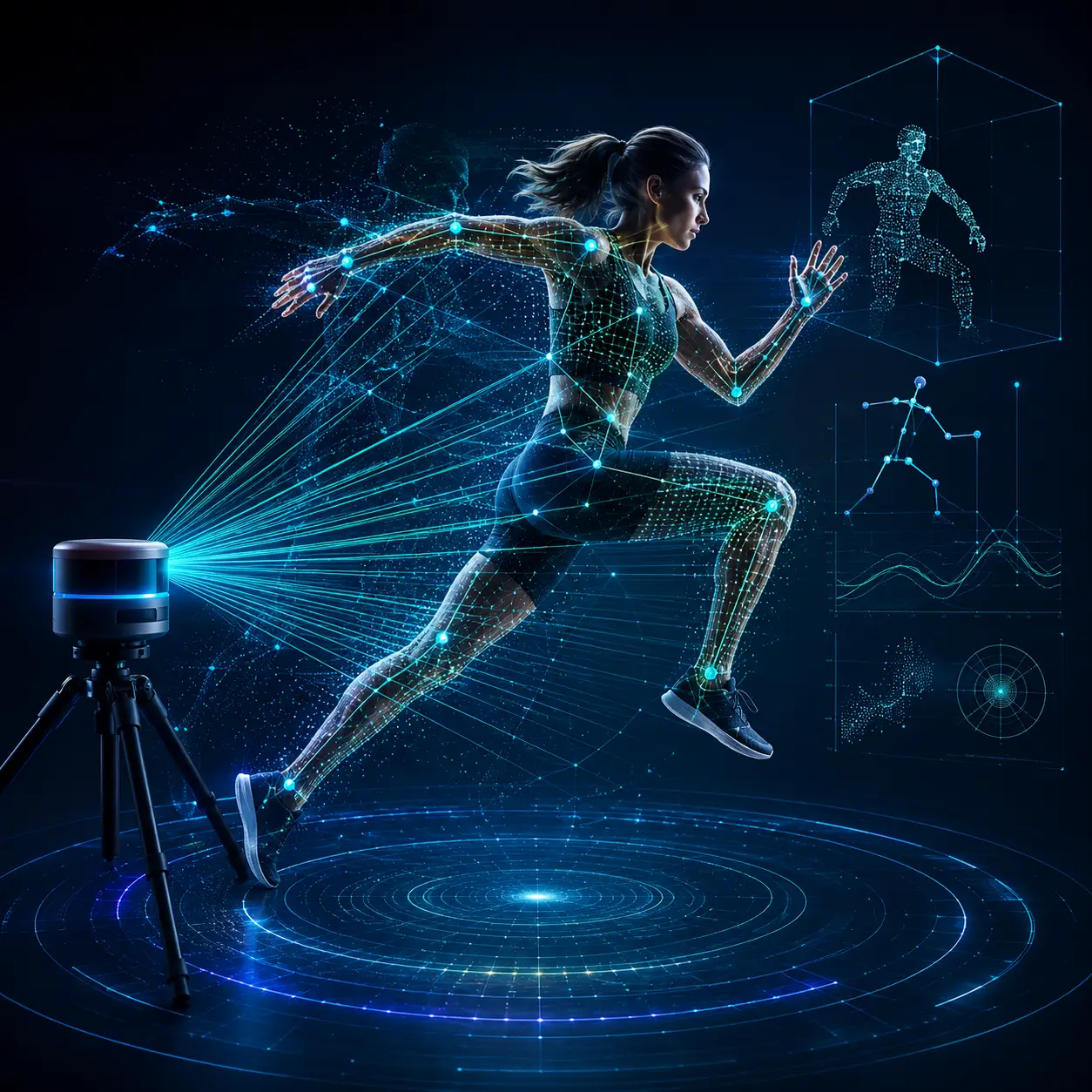
Physical AI brings intelligence into machines, sensors, infrastructure and connected objects operating in the real world.

Rather than depending entirely on centralized cloud intelligence, future systems should increasingly understand and respond to conditions locally. The physical environment becomes part of the intelligence.

Physical AISpatial intelligenceIntelligent sensor behaviourContext-aware systemsAdaptive sensingEdge intelligenceAutonomous network behaviourAI-assisted localizationEnvironmental understandingIntelligent physical infrastructureMachine perception through distributed sensors
Active research direction
Spatial sensing and edge intelligence visualized around a moving subjectR-04 / Network intelligence
04

Network intelligence

Network Intelligence & Edge Systems

Networks that adapt instead of simply communicate.

Large-scale connected systems cannot depend on every device communicating continuously. Energy, bandwidth, congestion and network conditions must all be considered.

Our research explores communication architectures where networks intelligently determine when devices should communicate, how information should propagate, which nodes should transmit and how data should reach gateways or sinks.

The objective is to move toward wireless networks capable of managing themselves intelligently.

MAC-layer designAdaptive transmissionDistributed coordinationCommunication schedulingEnergy-aware networkingMulti-hop communicationEdge computingNetwork optimizationInformation routingLow-overhead wireless systemsSink-oriented architecturesIntelligent communication protocols
Active research direction
Cinematic mine and processing environment with sensing and localization overlaysR-05 / Industrial systems
05

Industrial systems

Industrial Cyber-Physical Systems

Bringing intelligence into the environments that build the world.

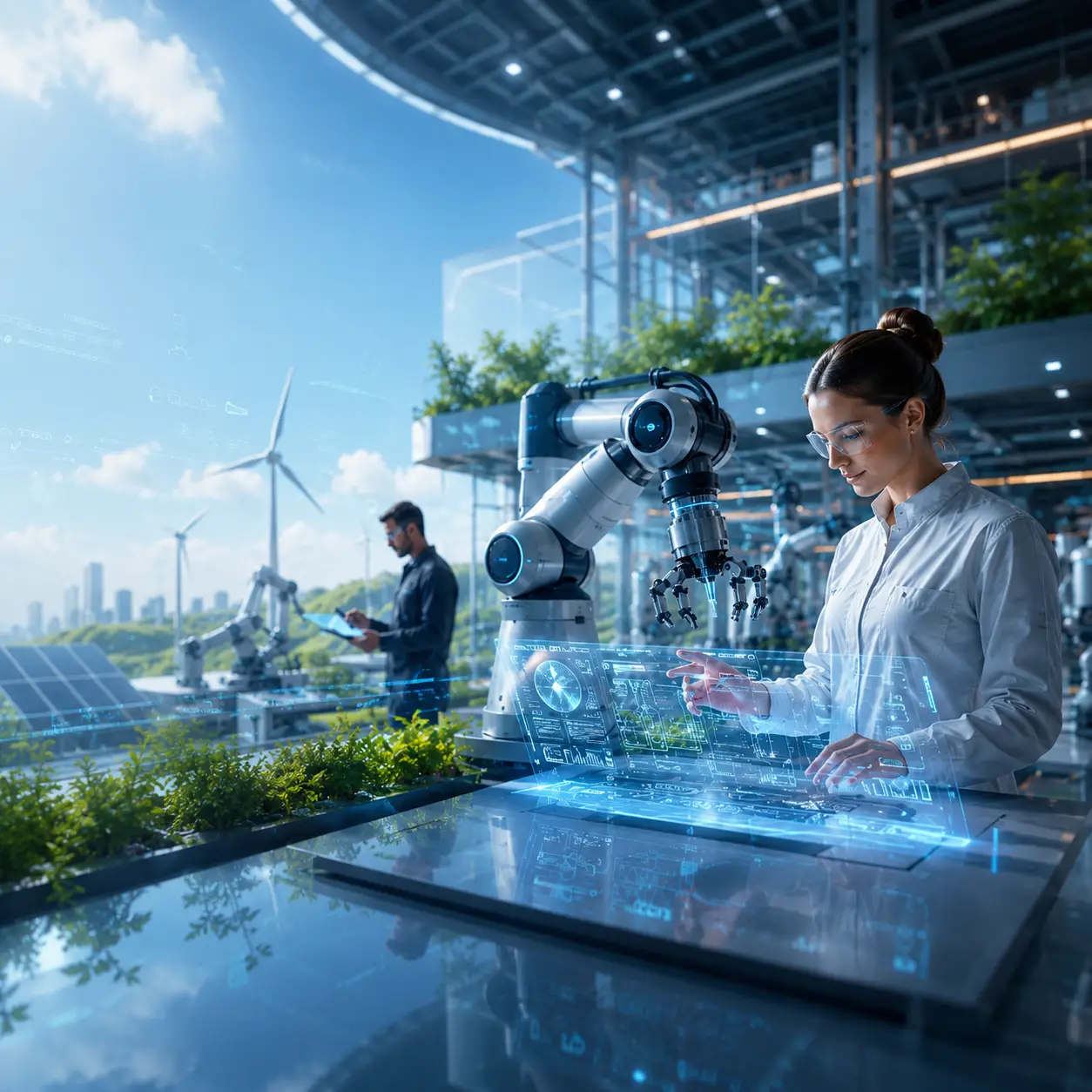
Many of the most important opportunities for sensing, AI and connectivity exist outside traditional digital environments.

Factories, mines, construction sites, logistics networks and infrastructure generate enormous physical complexity. Our research explores technologies designed specifically for these environments.

A core principle is that industrial technology must work under real operational constraints, including physical durability, unreliable connectivity, limited power, changing environments, scale, safety and operational practicality.

Mining technologyIndustrial sensingSmart manufacturingConstruction technologyLogistics intelligenceIndustrial automationConnected infrastructureHarsh-environment IoTDigital twinsIntelligent operationsCyber-physical systemsIndustrial AI
Active research direction
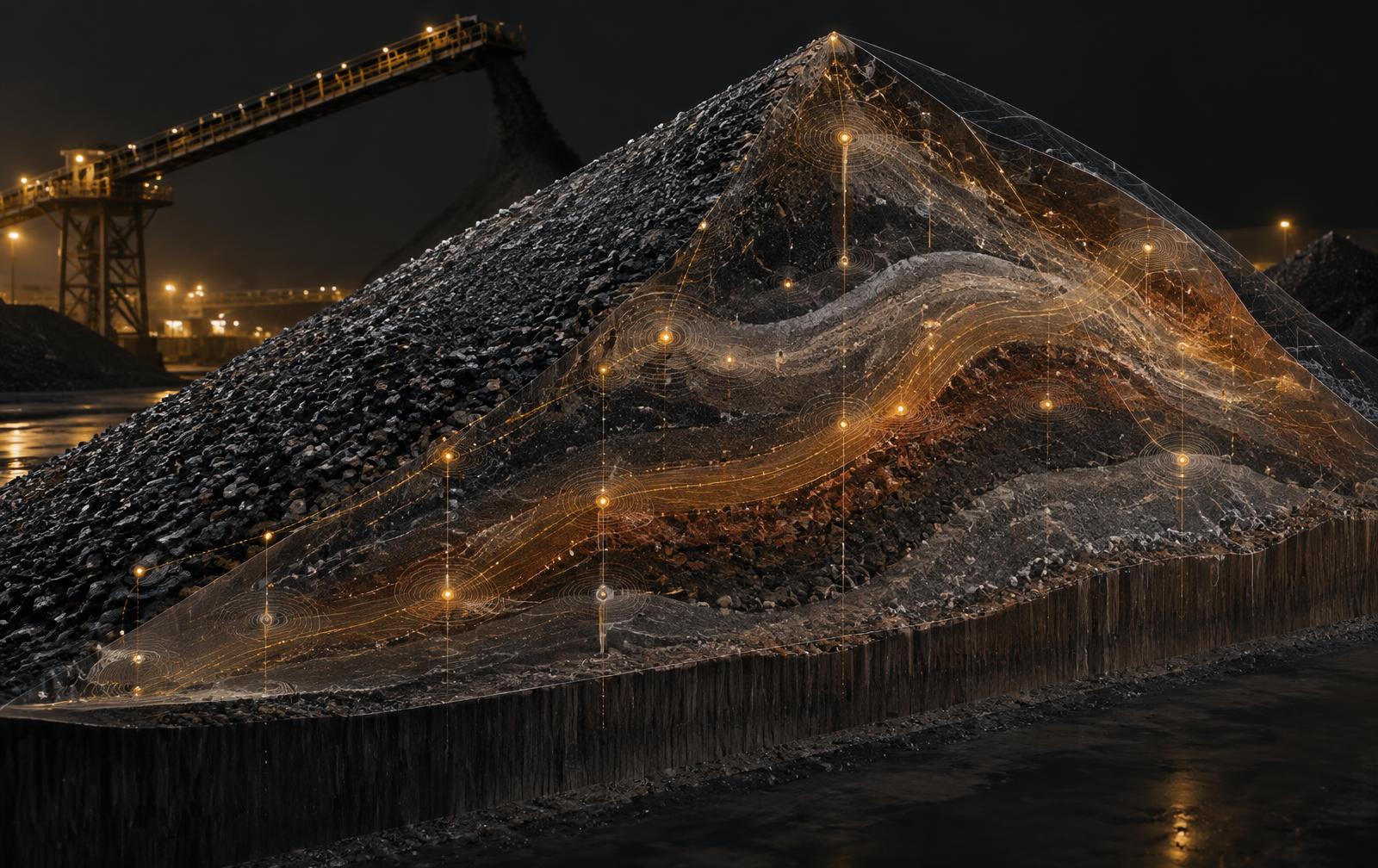
Cross-section of an industrial stockpile with embedded wireless tags and reconstructed movement layersR-06 / Material intelligence
06

Material intelligence

Material & Asset Intelligence

What if physical materials could tell us where they are?

Traditional asset tracking works well when objects remain discrete and accessible. Many industrial materials do not.

Ore, aggregates, bulk commodities and other materials may move through stockpiles, processing systems and environments where traditional tracking technologies become ineffective.

Our research investigates how embedded wireless devices and intelligent localization methods can preserve information about materials as they move through these environments.

Material trackingEmbedded wireless tagsBulk-material localizationIndustrial traceabilityStockpile intelligenceUnderground material movementTemporal localizationConnectivity-based trackingAsset historyMaterial provenanceProcess intelligence
Active research direction

Cross-cutting themes

Questions that connect the research.

Recurring scientific questions link the individual research areas into a coherent system.

01

How can devices understand location without GPS?

Explore localization using relationships rather than traditional coordinates.

02

How much information is actually necessary?

Investigate whether simple connectivity observations can replace expensive sensing or ranging.

03

Can wireless networks become spatial sensors?

Explore how communication relationships themselves can reveal information about physical environments.

04

Can devices make better decisions locally?

Develop edge intelligence that reduces dependence on centralized infrastructure.

05

How can intelligence survive difficult environments?

Design sensing and communication approaches capable of operating under harsh physical, radio and energy constraints.

Application environments

Research grounded in the real world.

Fundamental questions are tested against the constraints of physical environments.

01

Smart Buildings

Indoor localization and intelligent connected infrastructure.

02

Mining

Material tracking, underground sensing and harsh-environment communication.

03

Manufacturing

Connected machines, industrial sensing and operational intelligence.

04

Construction

Asset intelligence, connected infrastructure and physical tracking.

05

Logistics

Spatial awareness and intelligent movement of assets.

06

Infrastructure

Distributed sensing and intelligent physical systems.

From theory to application

Research should travel.

Fundamental research becomes especially valuable when it can move beyond simulations and papers. Our work aims to connect theory, algorithms, networks, hardware and real environments.

  1. 01Theory

    New models and research questions.

  2. 02Algorithms

    Methods for localization, communication and intelligence.

  3. 03Networks

    Distributed systems connecting devices.

  4. 04Hardware

    Wireless tags, sensors, gateways and embedded systems.

  5. 05Deployment

    Testing in buildings, industrial environments and physical infrastructure.

  6. 06Impact

    Better visibility, automation and decision-making.

Selected research directions

A connected program of inquiry.

Presented as research directions, not commercial products.

01

Anchor-Free 3D Localization

Spatial reconstruction without surveyed anchors or traditional ranging.

02

Multi-Story Indoor Localization

Understanding relative device position across floors and rooms.

03

Localization in Bulk Materials

Locating embedded wireless tags inside stockpiles and industrial material flows.

04

Power-Adaptive Localization

Using different transmission levels to reveal spatial relationships.

05

Temporal-Spatial Localization

Combining connectivity information with time relationships.

06

Intelligent MAC Design

Reducing network communication while preserving useful spatial information.

07

Physical AI for Industry

Combining distributed sensing, localization and AI for physical environments.

Embedded wireless nodes reconstructing the movement of material inside an industrial stockpile

Collaboration

Some problems are too interesting to solve alone.

We are interested in collaborating with researchers, universities, companies and organizations working on difficult problems involving localization, wireless systems, Physical AI and intelligent industrial environments.

Joint researchAcademic collaborationIndustry research partnershipsGraduate researchExperimental deploymentsResearch commercializationTechnology validationData and field studies
Explore Research Collaboration

The next infrastructure

The physical world is becoming intelligent.

Understanding where things are, how they communicate and what is happening around them is becoming fundamental to the next generation of connected systems.

Our research explores the technologies that can make that possible.